The Hidden Geometry of Public Art: A Review of Placemaking Design in Modern Cities
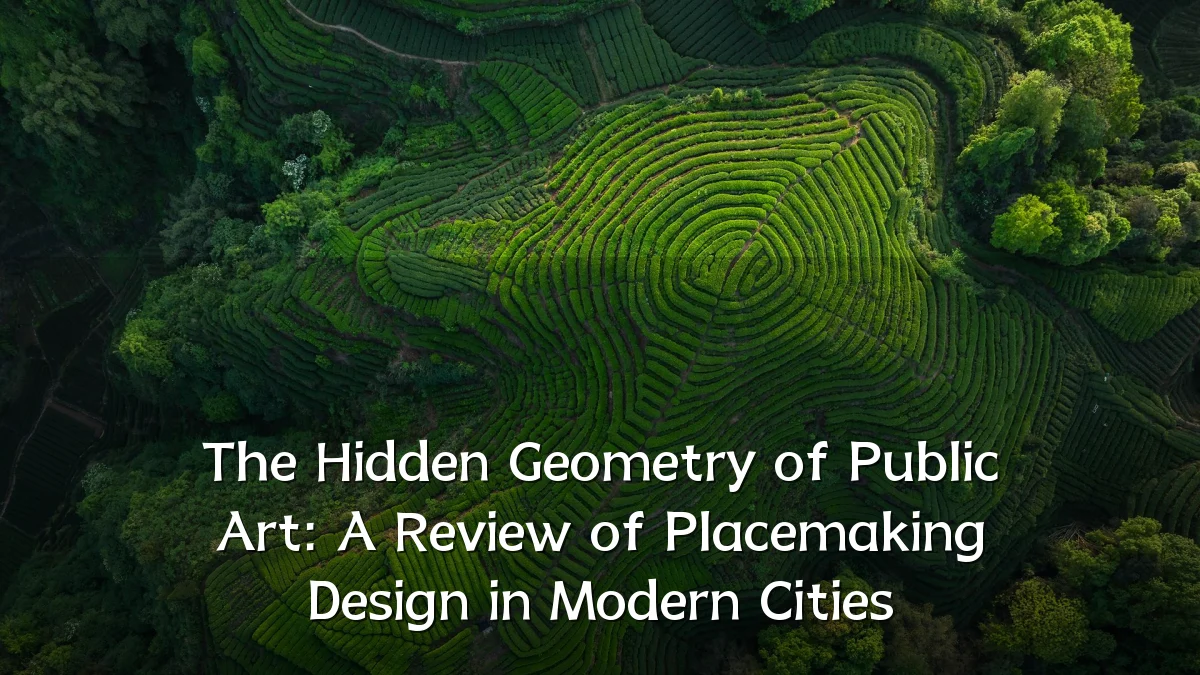
Public art has long served as a visual focal point for urban spaces, but contemporary placemaking design has shifted toward a more functional role. This review examines how current installations are evaluated not merely as objects, but as coordinates in a geometric matrix of movement, visibility, and civic engagement.
Recent Trends in Placemaking Design
Analysis of recent urban design projects reveals a clear departure from standalone monuments. Modern public art is increasingly evaluated for its environmental responsiveness and its ability to synchronize with pedestrian flow. The trend is moving away from purely static aesthetics toward designs that function as dynamic infrastructure.

- Interactive installations that adapt to real-time weather conditions or pedestrian density.
- Integration of ecological function, such as stormwater collection and passive cooling, into sculptural forms.
- Distributed art networks—multiple smaller, interconnected pieces replacing the single iconic landmark.
- Data-driven siting, relying on metrics like average dwell time and entryway foot traffic to inform spatial geometry.
Background: From Sculpture to Spatial Systems
The historical context of public art informs current review practices. Mid-20th century projects often featured large abstract pieces placed in plazas with limited architectural contextualization—a practice widely critiqued as cumbersome in urban planning circles. Contemporary placemaking design corrects this by treating the *interstitial space* around the artwork as the primary canvas. The "hidden geometry" of this approach references the invisible guidelines—sightlines, navigational friction, and crowd aggregation thresholds—that determine whether an art piece anchors a space or obstructs it.

Reviewers today often assess how a work influences existing transit configurations. The success of an installation is now measured by how well its form aligns with the environment's inherent human and vehicular flows.
User Concerns and Equitable Siting
Public engagement metrics often highlight a tension between artistic ambition and civic usability. Neutral assessments of public feedback point to recurring concerns that designers must navigate when proposing new geometries.
- Accessibility: Concerns about tactile paving, steep ramps, and sharp angles that may inadvertently create physical barriers or trip hazards.
- Long-term maintenance: Frequent issues with age-related weathering of complex materials, leading to high municipal upkeep costs.
- Clarity of Experience: Instances where abstract, geometric layouts confuse navigation for first-time visitors, creating stress rather than enjoyment.
- Noise and Privacy: Tensions between creating vibrant gathering spots and the need to protect adjacent residential zones from excessive 24/7 activity.
Likely Impacts on Urban Development
The influence of structured design reviews is becoming a decisive factor in municipal procurement. When public art is integrated as part of a strategic transit layout, it tends to encourage curated urban footprints. Local governments are increasingly weighing these design schematics against architectural budgets, using the geometry to justify connectivity investments. Prospective impacts include defining how public spaces are utilized, directing pedestrian pathways, and elevating the standard for competitive development requests.
What to Watch Next
The next phase of placemaking design will likely involve a deeper synthesis of digital modeling and community feedback. As urban centers evaluate the efficacy of recent installations, certain review criteria are expected to gain prominence.
- Simulation tools: Greater use of AI-driven software to predict sightlines and crowd distribution before public installation.
- Adaptive flexibility: A rise in temporary or modular programs that allow the geometric configuration to be adjusted based on observed behavior patterns.
- Climate adaptation: Incorporating climate-resilient materials and heat mitigation into the physical framework of the artwork itself.
- Standardized metrics: Development of industry-wide standards for measuring the social utility of spaces, moving beyond anecdotal visual appeal.
Ultimately, the future of public art reviews lies in balancing precise geometric planning with the unquantifiable messiness of human interaction. A successful design is likely to be one that offers a visible structure while remaining porous enough for the public to make it their own.